How Roller Shutters Can Lower Your Energy Bills Throughout the Year
Even Adelaide can’t claim to do mild weather particularly well. You’ve got a three- or four-day heatwave over 40°C every February, and come July you’ll be running your heating from morning until night. So much of that heating and cooling escapes straight out through the glass in our windows, and in many houses, nobody ever addresses it. It sounds simple, but most homeowners never even consider it as an area to improve when they’re looking for energy savings.
Roller shutters won’t fix your dodgy roof insulation, or an old door with a big gap under it that lets the weather through. But they can make a real difference to temperature loss and gain through the glass, which is generally the most poorly performing part of the outside of a home.
How shutters impact your power bill
This is where roller shutters come in, they make it harder for temperature to move between inside and outside. Below, we look at how that works in both directions, and what’s worth knowing before you buy.
Windows lose heat, and gain it fast
We all accept that builders have to insulate roofs and walls. It’s just a basic part of house construction.
The windows, though? That’s usually just a sheet of glass in a frame, and the glass insulates exactly as well as you’d expect: badly.
According to YourHome.com.au, the Australian government’s resource on healthy housing, up to 40% of heat is lost from your house in winter, and up to 87% of heat comes in during summer, through the glass alone. This varies house by house depending on which way your windows face, but the picture is clear either way: the window isn’t just glass, it’s usually the hottest spot on a wall and the biggest point of loss and gain.
Adding insult to injury, west-facing rooms get blasted directly by the afternoon sun all summer, which is not exactly ideal when you’re trying to save on power. Poorly sealed older aluminium windows don’t help either, since they can leave gaps that let air straight through. Turning up the AC or the heater won’t fix either problem.
In summer, the shutters simply get in the way
Close the shutters and the sun never reaches the glass in the first place, so there’s far less heat transferring into the room.
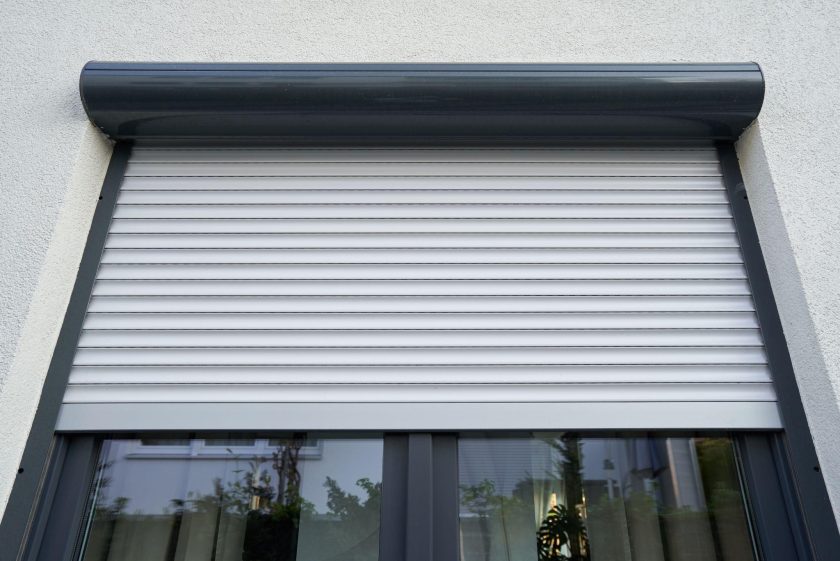
Properly installed roller shutters block up to 90% of solar heat transfer. If your air conditioner would normally run all day during a heatwave, it may only need to switch on for short bursts, or during the coolest part of the day.
Owners tell us, again and again, that their west-facing bedroom finally becomes sleepable during the day with the AC off and the shutter down, that the air conditioner seems to last longer, and that curtains stop bleaching from the sun. We actually get more enquiries about west-facing rooms than anything else, probably because they’re usually the hardest room in the house to get comfortable. If you want the fuller picture of what these shutters do beyond temperature, we’ve written more in our 10 benefits of installing roller shutters piece.
In winter, you’re creating a “dead air” gap
Close your shutters overnight and you create a thin layer of still air between the window and the shutter. That air traps heat and stops much of it escaping.
A shutter can’t make up for poor ceiling insulation or a gap under the back door, but it does add a free “extra pane” that holds heat in for longer. That means less need to run the heater constantly, especially first thing in the morning. Draughts around the window frame drop too.
For a longer look at how the same shutters perform across a full Adelaide year, our ultimate guide to roller shutters for homes covers it in more depth.
It’s not just about the power bill
Saving on power is a big part of it, but it’s not the only reason people install roller shutters. A few other things worth knowing about:
Increased security. A closed shutter is a very visible deterrent to would-be burglars, and it’s a real physical barrier over the window, not just a visual one.
Reduced noise. If you’re on a busy road or near other noise, that same dead-air gap that keeps the heat out also cuts down on sound getting in.
Better privacy. The solid construction of a roller shutter is a proper visual barrier, so passers-by can’t see in. That matters a lot for bedrooms or bathrooms that face the street.
How shutters compare to other options
Curtains and blinds help a little, but only to a point. They sit behind the glass, so by the time the sun reaches them, it’s already made it into the room and warmed the glass. That limits how much they can do about summer heat gain.
Double glazing offers the best protection out of anything, but it’s not always practical, affordable, or accessible, especially for an existing home. It would cut both heat loss and heat gain more than shutters can, but the cost and disruption of retrofitting it rarely stacks up against the alternatives for a lot of established houses.
Roller shutters land in a more practical spot: affordable, they protect your home in both summer and winter, and they add security, privacy, and noise reduction, all for a fraction of the cost of retrofitting double glazing. If you’re trying to work out which style suits which room, our guide to different types of roller shutters is a decent starting point.
What actually affects how much you save
Not every shutter performs the same, and a sloppy installation will undo a lot of the benefit no matter how good the product is.
Foam-filled aluminium slats insulate better than hollow aluminium or PVC; the foam core is doing real work, not just adding bulk. Lighter colours reflect more heat than dark ones, worth remembering given the shutter itself sits in direct sun all day. Fit matters more than people expect too. Even a gap of a few millimetres at the edge lets heat sneak past, no matter how good the slats are, and that comes down to correct measuring and installation rather than the product itself.
One thing we notice again and again: shutters that take real effort to wind down by hand tend to stay open. Motorised shutters, especially ones you can trigger from a wall switch, actually get closed at 2 pm when it matters, because it only takes two seconds. That habit alone probably affects your bill more than the brand of shutter you buy.
Our guide to choosing the best external shutters goes further into these choices if you’re comparing options.