The Ultimate Guide to Roller Shutters for Homes
Most people come to roller shutters the same way: a noisy street, a hot summer, a break-in down the road. Something triggers the question — “Should I finally do this?” — and then they discover there’s a lot more to decide than they expected.
This guide covers the practical side of roller shutters: what they do well, where they fall short, how to pick the right type, and what to watch for during installation. If you’re based in Adelaide or Gawler and want a quote, the team at Knight Shutters & Improvements does free in-home assessments with no hard sell — but this guide is useful regardless of who you end up going with.
What roller shutters actually do
The honest answer is’several things at once, and how much you care about each of them usually determines which type you need.
Security
A closed roller shutter puts a hard physical barrier over your windows and doors. It doesn’t make your house impenetrable, but it does make it a harder target than the next one. Most opportunistic break-ins don’t involve tools — the shutter alone is enough to move them along. This matters most on ground-floor windows, rear entries, and anywhere you’re regularly away for extended periods.
Temperature Control
Adelaide summers are brutal. South-facing windows aside, a roller shutter adds a meaningful insulating layer that slows heat transfer in both directions – cooler in summer, warmer in winter. The energy savings vary by house, window size, and existing insulation, but most people notice the difference on their first full summer with shutters installed.
Noise Reduction
If you’re near a main road, a train line, or have a neighbour who enjoys loud hobbies, roller shutters help. They’re not soundproof, but a good aluminium shutter with foam-filled slats can cut ambient noise noticeably — enough that many people mention it as their favourite benefit after living with the shutters for a few months.
Light Control and Privacy
Unlike blinds, shutters let you go from full blackout to fully open with no ambiguity. For shift workers, parents of young children, or anyone sensitive to early morning light, this is genuinely useful. You also get complete privacy when closed — no silhouettes through frosted glass, no need to angle curtains.
Weather Protection
In storm-prone areas, shutters protect windows from flying debris and heavy hail. For bushfire-adjacent properties, there are fire-resistant rated options. Not every homeowner needs this level of protection, but it’s worth knowing the option exists.
Manual vs motorised: which one to get
This is the first question most installers will ask you, and it’s worth thinking through before your in-home consultation.
Manual shutters
Operated by a strap or crank, manual shutters are more affordable upfront and have fewer components to maintain. The tradeoff is convenience — particularly on large or hard-to-reach windows where rolling the shutter up and down daily becomes a chore. They’re a solid choice for secondary windows or outbuildings where you don’t need frequent operation.
Motorised shutters
A motor means you operate the shutter with a wall switch, remote control, or even your phone through apps like Broadlink or Google Home integration. For windows you open and close daily, the difference is significant. Motorised shutters are also easier to use for elderly or mobility-impaired residents.
Battery-operated motors have improved a lot in recent years — they’re quiet, fast, and charge easily via USB. Hardwired motors are more reliable long-term but require an electrician.
Knight Shutters supplies and installs both manual and motorised roller shutters across Adelaide, sourcing from CW Products and Ozroll — the two main South Australian manufacturers.
Materials and construction
Most residential roller shutters in Australia are aluminium — it handles the climate well, doesn’t rust, and is lightweight enough to motorise without oversized mechanisms.
Foam-filled vs hollow slats
Foam-filled slats offer better insulation and noise reduction. If temperature control is a priority, ask specifically for foam-filled ones — not all shutters include this by default, and the cost difference is small.
Perforated slats
Some shutters use perforated slats that let air and filtered light through when closed. Useful for ventilation in summer. Less useful if you want blackout or maximum security, since the perforations slightly reduce the structural integrity of the slat.
Installation: what to think about beforehand
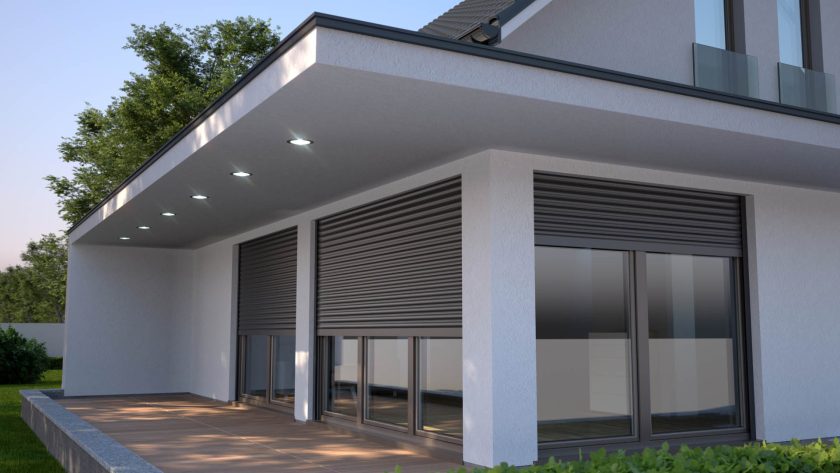
Roller shutters can go onto most existing windows and doors without major renovation. The shutter box (which houses the rolled-up shutter) sits above the window — either on the face of the wall or built into the reveal. Face-fix is more common in retrofits; built-in looks cleaner but requires more wall preparation.
A few things worth checking before an installer visits:
- Clearance above the window: The shutter box needs space — usually 200–350 mm depending on the window size and slat type. This is rarely a problem but worth knowing for windows under eaves or with tight architraves.
- Power access for motorised shutters: Battery motors don’t need wiring, but hardwired motors do. If you’re adding motorised shutters to multiple windows, it’s worth talking to an electrician in advance or asking your installer what’s involved.
- Wall construction: Masonry walls, timber frames, and rendered surfaces all install fine — the fixings are different. A decent installer will assess this during the quote visit and specify the right hardware. No surprises on the day.
The Adelaide roller shutter installation process at Knight Shutters includes precise measurement on the quote visit, custom manufacturing to size, and professional installation — typically completed in a few hours per house.
A few questions worth asking your installer
Before you sign off on a quote, these are the things most buyers wish they’d asked:
Can I see examples of your previous work? Most local installers will have a project gallery or can point you to Google reviews with photos. Knight Shutters has a projects page and a gallery worth browsing.
What happens if there’s a problem after installation? Get clarity on who you call and how quickly they respond. A company that’s hard to reach during the sale is usually harder to reach afterwards.
If you’re based in Adelaide, the Barossa, or surrounding SA suburbs and want to talk through options, contact Knight Shutters & Improvements. The quote visit is free, Anand and the team are straightforward to deal with, and there’s no pressure to decide on the day.