A Complete Guide to Different Types of Roller Shutters in 2026
Most people spend about three minutes researching roller shutters before calling for a quote. That’s not enough time to figure out whether you need a manual crank, a motorised system, a security-grade option, or something built specifically for Australian summers. This guide fixes that.
WHAT’S IN THIS GUIDE
- Why the type of shutter actually matters
- Manual roller shutters
- Motorised roller shutters
- Battery-operated shutters
- Security roller shutters
- Insulated roller shutters
- Commercial and industrial shutters
- Side-by-side comparison
- How to choose the right type
- Common questions
Does the type of roller shutter actually matter?
Adelaide summers are brutal. Temperatures regularly hit 40°C+, west-facing rooms turn into ovens by mid-afternoon, and energy bills spike in January and February. The right roller shutter cuts that heat before it gets through the glass. The wrong one, or the wrong installation, does very little. Security is the other side of it. A standard shutter and a security-rated one can look almost identical from the street, but one will stop a break-in attempt and the other won’t. Knowing the difference before you buy saves you from replacing shutters you thought would protect you.
None of this is complicated once you understand the options. Here’s each type explained plainly.
Manual roller shutters
Manual (strap- or crank-operated) You pull a strap or turn a crank handle to raise and lower the shutter. No power required, no motor to replace, nothing to go wrong electronically. The shutter rolls onto a barrel above the window and locks in place when closed. They work well on windows you open once a day – bedrooms you close at night, or a home office window you shut on hot afternoons. Where they get annoying is on large windows or multiple shutters you need to operate frequently.
One thing worth knowing: strap-operated shutters are generally cheaper than crank systems, but they’re also harder to use on large or heavy shutters. If your window is wider than about 2.4 metres, a crank or motor is a better fit.
Motorised roller shutters
You pull a strap or turn a crank handle to raise and lower the shutter. No power required, no motor to replace, nothing to go wrong electronically. The shutter rolls onto a barrel above the window and locks in place when closed. They work well on windows you open once a day — bedrooms you close at night, or a home office window you shut on hot afternoons. Where they get annoying is on large windows or multiple shutters you need to operate frequently.
Motorised roller shutters
A tubular motor inside the barrel does the lifting. You control it with a wall switch, a remote control, or, with the right setup, a smartphone app or voice assistant like Google Home or Alexa. Most motorised shutters also include manual override in case of a power outage. This is the most popular choice for Adelaide homeowners upgrading from manual systems. You can close all your shutters from bed before the afternoon heat sets in or schedule them to close automatically at a set time each day.
Battery-operated roller shutters
These offer the same convenience as a mains-powered motor, but the motor runs on a rechargeable battery pack built into the barrel. You charge it via USB or a solar panel attachment, typically every few months depending on usage. The practical advantage is installation is flexible since you don’t need and electrician nor do you need to run cable through walls. They work in garages, sheds, older buildings where running power is difficult, or any situation where you want motorised operation without the wiring.
“Had retrofitted battery-operated controllers to replace previously winding mechanisms (x3). I was surprised by how fast it rolls up, totally quiet and very easy to charge.”
Security roller shutters
These use thicker aluminium slats that are typically 77mm double-skin foam-filled profiles rather than the standard 45mm, and reinforced end caps that resist levering and forcing. The bottom rail locks into guides on both sides, making it much harder to lift from the outside. They’re the right choice for ground-floor windows, shopfronts, warehouses, or anywhere you have a genuine security concern rather than just privacy and heat control.
A quick note on terminology: any roller shutter provides some deterrence just by looking solid. But security shutters as a specific product category have tested ratings and particular construction features. It’s worth asking specifically which profile and locking system you’re getting.
Insulated roller shutters
The slats are hollow and filled with polyurethane foam. This adds meaningful thermal resistance compared to a standard aluminium slat, reducing heat transfer through the closed shutter and also cutting noise from outside. For Adelaide homes dealing with extreme summer heat, insulated shutters perform noticeably better than non-insulated options. They’re also popular in homes near busy roads or flight paths where sound reduction matters alongside temperature control.
Commercial and industrial roller shutters
Designed for openings that are wider, taller, and used more frequently than a residential window, shopfronts, warehouses, loading docks, and parking garages. The motors are rated for higher cycle counts, the slats are heavier gauge, and the guides are built to handle larger span dimensions without flex. Wind rating matters here too: a commercial shutter on an exposed shopfront or industrial building needs to be engineered for the load, something residential shutters aren’t tested for.
Side-by-side comparison
| Type | Ease of Use | Security | Insulation | Cost | Best For |
|---|---|---|---|---|---|
| Manual | Moderate | Basic | Standard | $ | Single windows, low use |
| Motorised | Very easy | Basic | Standard | $$ | Multiple windows, living areas |
| Battery | Very easy | Basic | Standard | $$ | No power access, retrofits |
| Security | Varies | Reinforced | Good | $$$ | Ground floor, shopfronts |
| Insulated | Varies | Basic | High | $$–$$$ | Heat, noise reduction |
| Commercial | Easy | Reinforced | Varies | $$$$ | Warehouses, loading docks |
How to choose the right type for your situation
The type you need depends on three things: where it’s going, how often you’ll use it, and what problem you’re primarily solving.
Quick decision guide
- Are you fitting one or two bedroom windows you’ll open at night and close in the morning? Manual is probably fine and saves money.
- Three or more windows, or a large living area window? Motorised pays for itself in convenience within a few months.
- No power outlet near the window and don’t want to pay an electrician? Battery-operated solves this cleanly.
- Main concern is security shopfront, ground-floor home, warehouse? Specify security-grade profiles with reinforced locking rails, not standard residential shutters
- In a west or north-facing room that gets brutal afternoon heat? Insulated foam-filled slats make a real difference, not just a marginal one.
Common questions
How long do roller shutters actually last in Adelaide’s climate?
A well-installed aluminium roller shutter should last 15–25 years. The slats themselves rarely fail; it’s usually the motor, spring mechanism, or control system that eventually needs attention. Buying from a manufacturer with local spare parts availability makes servicing straightforward when that time comes.
Can I retrofit motorised controls to my existing manual shutters?
In many cases, yes. Battery-operated motors can be fitted into existing barrels without major modifications. Mains-powered retrofits need a power source near the shutter. It depends on the barrel size and shutter weight, worth getting someone to assess it before assuming it’ll work.
Do roller shutters actually reduce energy bills?
They do. Closing shutters before peak afternoon heat reduces the amount of solar radiation entering through glass, which is one of the biggest sources of heat gain in Australian homes. The energy savings depend on your home’s orientation, window size, and how consistently you use them – but it’s not trivial.
Do I need council approval to install roller shutters in Adelaide?
For most residential installations, no. But if you’re in a heritage overlay zone or if the shutters are visible from the street and your local council has specific guidelines, it’s worth checking. A licensed installer (like Knight Shutters, BLD 293749) can advise you on this before work begins.
What colours and finishes are available?
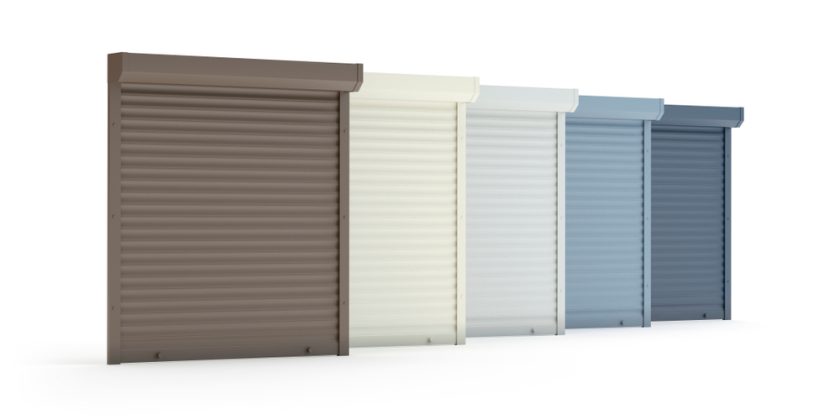
Most manufacturers offer a standard range of powdercoat colours, including Colorbond matched options, so your shutters can match or complement your roof and trim. Colour choice doesn’t affect performance—it’s purely aesthetic—so pick what works with your facade.